
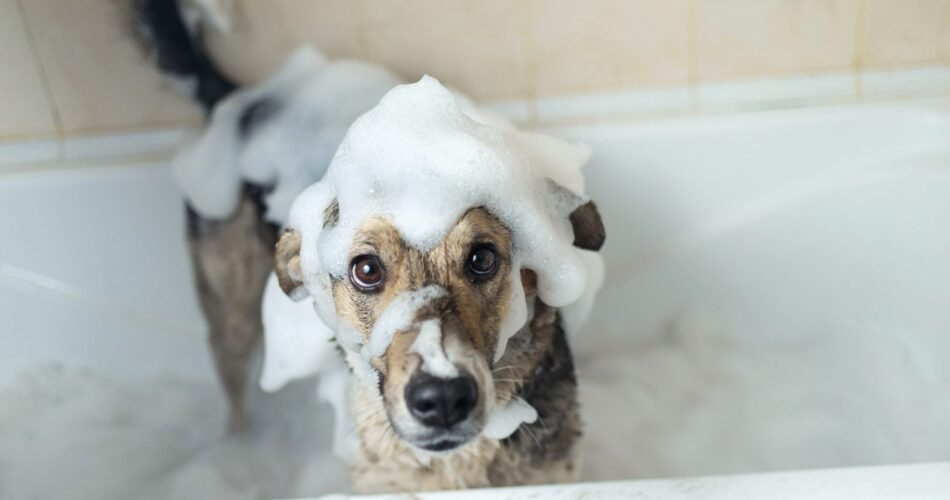
If your dog smells bad even after a bath, it can feel frustrating and confusing. You shampooed them. You dried them. Yet somehow, the odor comes back within hours — or never fully disappears.
A lingering dog smell is not always about dirt. In many cases, it signals something deeper happening beneath the surface.
Let’s break down the real reasons your dog still smells after bathing — and what it actually means.

Why Does My Dog Smell Bad Even After a Bath?
Before assuming you did something wrong, understand this: bathing only removes surface dirt and oils. If the source of the odor is internal or skin-related, the smell will return quickly.
If your dog smells bad even after a bath, the cause is usually one of the following seven issues.
1. Skin Infections (Bacterial or Fungal)
One of the most common reasons a dog smells bad even after a bath is a skin infection.
Bacteria and yeast thrive in warm, moist areas such as:
- Under the ears
- Between skin folds
- Around the paws
- Under the collar
Signs to watch for:
- Red or irritated skin
- Greasy or sticky fur
- Persistent itching
- A sour or musty odor
Breeds like the Bulldog and Cocker Spaniel are especially prone due to skin folds and floppy ears.
Bathing may temporarily mask the smell, but infections require proper treatment.
2. Ear Infections
If the odor seems stronger near your dog’s head, the issue may be inside the ears.
Ear infections can produce:
- Strong, sour smell
- Dark discharge
- Head shaking
- Sensitivity to touch
Moisture trapped after baths can worsen existing ear problems.
Breeds like the Basset Hound and Golden Retriever are more susceptible due to their ear structure.
3. Dental Disease
Sometimes the smell isn’t coming from the coat at all.
Bad breath caused by:
- Tartar buildup
- Gum disease
- Tooth decay
can make it seem like your dog smells bad even after a bath.
If the odor smells rotten or metallic, check the mouth.
Other signs include:
- Yellow teeth
- Red gums
- Drooling
- Difficulty chewing
Dental health is often overlooked but plays a major role in overall odor.
4. Anal Gland Issues
A strong, fishy odor is often linked to anal glands.
Dogs naturally express these glands when they defecate. However, if they become impacted or infected, the smell can linger even after bathing.
Signs include:
- Scooting on the floor
- Excessive licking near the tail
- Sudden strong fishy smell
This odor tends to return quickly if glands are not properly expressed.
5. Wet Dog Smell (Improper Drying)
If your dog smells bad even after a bath, moisture may still be trapped in the coat.
When fur remains damp:
- Bacteria multiply
- Yeast grows
- Musty odor develops
Double-coated breeds like the Siberian Husky and Labrador Retriever take longer to dry completely.
Towel drying alone is often not enough.
6. Allergies
Allergies can cause excessive oil production and skin irritation, leading to odor.
Triggers may include:
- Pollen
- Dust
- Certain food proteins
- Cleaning products
Symptoms often include:
- Constant scratching
- Red paws
- Recurrent ear infections
- Greasy coat
If allergies are present, bathing helps temporarily but won’t eliminate the root cause.
For more information on allergy-related symptoms, you can review guidance from the American Kennel Club.
7. Low-Quality Shampoo or Overbathing
Sometimes the problem isn’t your dog — it’s the grooming routine.
Harsh shampoos can:
- Strip natural oils
- Disrupt skin balance
- Increase oil production afterward
Overbathing can actually worsen odor over time.
Dogs generally need bathing every 4–6 weeks unless dirty or medically advised otherwise.
Using products not formulated for canine skin can also cause imbalance.
When Should You Worry?
A dog that smells slightly “dog-like” is normal.
However, if your dog smells bad even after a bath and you notice:
- Hair loss
- Red patches
- Discharge
- Behavioral changes
- Persistent itching
it’s time to consult a veterinarian.
Odor is often an early warning sign of a deeper issue.
Why the Smell Comes Back So Fast
If odor returns within 24 hours of bathing, it usually means:
- Infection wasn’t addressed
- Glands weren’t expressed
- Skin barrier is compromised
- The coat wasn’t fully dried
Bathing treats symptoms — not underlying conditions.
How to Narrow Down the Source of the Smell
Instead of guessing, check systematically:
- Smell the ears
- Check the mouth
- Examine paws
- Inspect skin folds
- Look near the tail
The location of the strongest odor often reveals the cause.
Breeds More Prone to Odor Problems
Certain breeds naturally produce more oil or have structural traits that trap moisture:
- Shar Pei
- English Bulldog
- Pug
- Saint Bernard
If you own one of these breeds, proactive hygiene is essential.
Preventative Steps (Before Turning to Products)
If your dog smells bad even after a bath, focus on prevention first:
Keep Ears Dry
Always dry ears gently after bathing.
Brush Regularly
Removes trapped debris and distributes oils evenly.
Improve Diet Quality
Healthy fats support skin balance.
Monitor Skin Changes
Early intervention prevents stronger odors later.
Don’t Overwash
Stick to a healthy bathing schedule.
Final Thoughts
If your dog smells bad even after a bath, the issue is rarely just dirt.
Most persistent odors come from:
- Skin infections
- Ear problems
- Dental disease
- Anal gland issues
- Allergies
- Improper drying
Understanding the root cause is far more effective than bathing more often.
Addressing the source will not only eliminate the smell — it will improve your dog’s overall health.
If you’ve tried everything, than check out this guide.


