
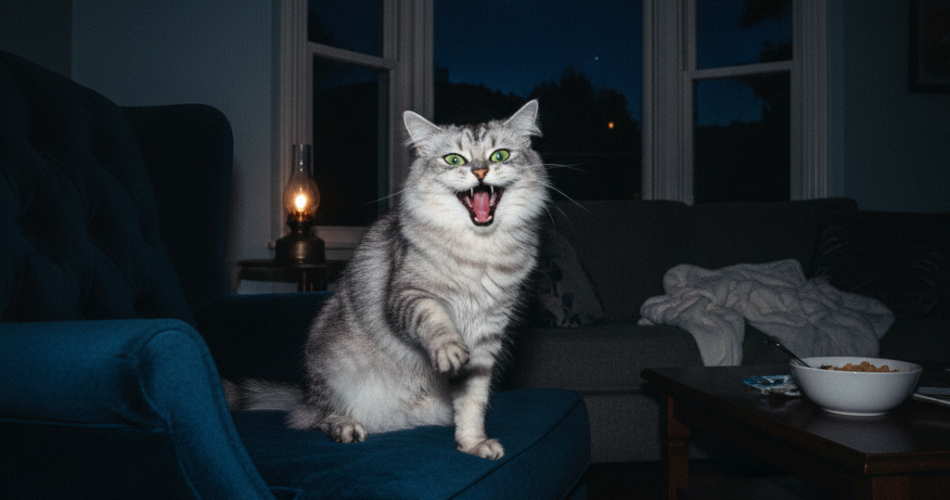
If you’ve ever asked, “why is my cat meowing at night?”, you know how frustrating it can be. Your cat may yowl, meow repeatedly, or even keep you awake for hours, leaving you wondering what’s causing this nighttime behavior.
Cats are naturally nocturnal and crepuscular, but excessive nighttime meowing is often a sign of unmet needs, medical issues, or behavioral factors. Understanding why cats meow at night helps you address the problem while ensuring your cat stays happy and healthy.
Is Nighttime Meowing Normal?
Some meowing at night is normal due to a cat’s natural activity cycle:

- Cats are more active at dawn and dusk
- Hunting instincts make them alert at night
- Young kittens may meow for attention or warmth
However, persistent or loud meowing can indicate underlying issues that require attention.
1. Hunger or Thirst
One of the simplest explanations for night meowing is a hungry or thirsty cat.
Signs include:
- Meowing near the food bowl
- Pawing at you or bringing you toys
- Increased activity around meal times
Solutions:
- Ensure regular feeding schedules
- Consider an automatic feeder for nighttime meals
2. Seeking Attention
Cats sometimes meow at night simply to interact with their owners.
- Young cats and kittens are especially attention-seeking
- Older cats may develop routines expecting nighttime interaction
Strategies:
- Increase daytime play and engagement
- Avoid rewarding nighttime meowing with attention
3. Boredom or Lack of Stimulation
If your cat is under-stimulated, nighttime may become their active playtime.
Signs of boredom-induced meowing:
- Pacing or restless behavior
- Playing with toys loudly at night
- Scratching furniture or knocking items over
Solutions:
- Provide interactive toys
- Offer climbing spaces or scratching posts
- Engage in play sessions before bedtime
4. Medical Issues
Persistent nighttime meowing may indicate health problems, especially in older cats:
- Hyperthyroidism
- Kidney disease
- Pain or discomfort
- Cognitive decline in senior cats
Look for additional symptoms like vomiting, changes in appetite, weight loss, or disorientation.
5. Stress or Anxiety
Stress and anxiety can trigger vocalizations at night:
- Changes in environment (moving, new pets, construction)
- Separation anxiety
- Loud noises or nighttime disruptions
Stress-induced meowing is often accompanied by other behaviors like pacing, hiding, or excessive grooming.
6. Age-Related Changes
Senior cats may meow at night due to cognitive decline or confusion:
- Alzheimer’s-like symptoms in cats (feline cognitive dysfunction)
- Disorientation leading to vocalizations
- Sleep pattern changes
If your older cat suddenly meows more at night, consider a veterinary evaluation.
7. Estrus (Heat Cycles)
Unspayed female cats may meow excessively at night during heat cycles:
- Loud, repetitive yowling
- Restlessness and rolling behavior
- Attempting to escape
Spaying can prevent this type of nighttime meowing.
How to Reduce Nighttime Meowing
1. Establish a Routine
- Feed and play at consistent times
- Create a predictable bedtime routine for your cat
2. Provide Enrichment
- Puzzle feeders and interactive toys
- Scratching posts or cat trees
- Safe nighttime access to windows or perches
3. Avoid Reinforcing Nighttime Meowing
- Do not feed or give attention when your cat meows at night
- Reward quiet, calm behavior instead
4. Ensure Comfort
- Provide a cozy sleeping area
- Maintain water availability
- Check litter box accessibility
5. Consult a Veterinarian
If your cat’s meowing is sudden, excessive, or accompanied by other symptoms, a vet can rule out:
- Pain or illness
- Cognitive dysfunction
- Hormonal imbalances
Breeds More Prone to Nighttime Vocalization
Certain cat breeds are naturally more vocal or active at night:
- Siamese
- Oriental Shorthair
- Burmese
- Tonkinese
Understanding breed tendencies can help set realistic expectations.


