
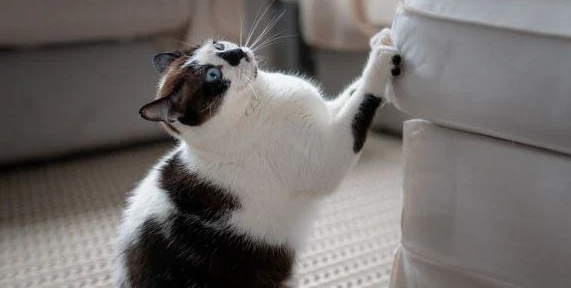
If you’ve ever asked yourself, “why does my cat scratch the couch even with a scratcher?”, you’re not alone. Many cat owners invest in scratching posts, pads, and furniture covers — yet their feline friends continue to target the couch.
Scratching is a natural and essential behavior for cats, but when it becomes destructive, it can be frustrating. Understanding why cats scratch certain objects and how to redirect the behavior is key to maintaining both your cat’s wellbeing and your furniture.
Why Cats Scratch: The Basics
All cats scratch. It’s a natural instinct with multiple purposes:

- Marking territory: Cats have scent glands in their paws. Scratching leaves both a visual and scent mark.
- Nail maintenance: Scratching helps remove the outer layer of claws.
- Stretching: It helps stretch muscles in their legs, shoulders, and back.
- Stress relief: Scratching can be calming or a way to release energy.
Even if a cat has a proper scratcher, some objects may feel more satisfying or strategically placed for marking.
1. Location Preference
Cats often scratch where they feel the most secure or visible. Your couch may be in a central area or near a window, making it an ideal spot for marking territory.
Signs that location is a factor:
- Scratching happens in the same spot repeatedly
- Couch is near cat’s favorite resting areas
- Scratcher is located in a less prominent place
Moving the scratcher closer to the preferred location can sometimes solve the problem.
2. Scratcher Type or Texture
Cats can be picky about scratchers. They often prefer specific textures like:
- Sisal or rope
- Carpet
- Cardboard
If the couch surface feels more satisfying than the scratcher, your cat will choose the couch.
Tips:
- Offer multiple scratcher types
- Observe which materials your cat naturally prefers
- Replace worn scratchers
3. Scent Marking and Territory
Even indoor cats mark their territory to communicate with other pets or people. Scratching the couch leaves:
- Visual marks
- Pheromone-based scent marks
Cats may ignore scratchers if they feel those posts don’t communicate as effectively.
4. Boredom or Excess Energy
Cats often scratch when they’re under-stimulated. If playtime is limited, your cat may redirect energy toward furniture.
Signs include:
- Nighttime hyperactivity
- Frequent couch scratching after periods of inactivity
- Chewing or knocking items over
Increased mental and physical stimulation can reduce destructive scratching.
5. Stress or Anxiety
Cats also scratch to relieve stress. Common triggers include:
- New pets or humans in the household
- Changes in environment (moving or renovations)
- Loud noises or disruption to routine
Stress-induced scratching often appears suddenly and may be more aggressive.
6. Inadequate Scratcher Placement
Cats may ignore scratchers if they’re inconveniently located:
- Too far from favorite resting spots
- Not stable (wobbly posts)
- In unappealing areas (too quiet or inaccessible)
Tip: Place scratchers near the couch, window, or cat bed to encourage use.
7. Age and Experience
Older cats may have habits already formed around couch scratching. Younger kittens may need guidance to learn appropriate scratching surfaces.
Consistency and reinforcement are key to changing these habits.
How to Redirect Couch Scratching
1. Provide Appealing Alternatives
- Use various materials (sisal, cardboard, carpet)
- Offer both vertical and horizontal scratchers
- Add catnip or toys to increase attractiveness
2. Protect the Couch
- Use furniture covers or double-sided tape
- Repel cats with citrus or pet-safe deterrents
3. Positive Reinforcement
- Reward cats when they use scratchers
- Avoid punishment, which can increase stress and anxiety
4. Environmental Enrichment
- Interactive toys, climbing towers, and playtime reduce boredom
- Scheduled play sessions help expend energy
5. Regular Nail Care
- Trim claws regularly to minimize furniture damage
Breeds That Scratch More Often
Some cats are naturally more inclined to scratch due to activity levels and instinctual behavior:
- Maine Coon
- Siamese
- Bengal
- Abyssinian
Understanding breed tendencies helps predict scratching behavior.


